Introduction
In today’s world, Social Media is not just a way to connect and stay in touch with friends and family; it has transformed into a global powerhouse. With a huge reach of over 5.31 billion people across the world, which accounts for more than 64% of the global population, it is a great platform to advertise and reach the maximum number of people. Also, it enables us to target specific audiences that might be interested in our product or service based on demographics and customer behaviour.
Social networking is a powerful tool that every company should take seriously in the rapidly evolving digital world of today. Social media marketing may help you reach the right people without going over budget, whether you’re launching a new product or attempting to start from scratch with a brand. However, where do you begin? What makes it so crucial? And how might your company benefit from it? We’ll provide a straightforward explanation of the why, what, and how of social media marketing for companies in this blog. Together, we can get you seen, followed, and discussed.
Why Social Media Marketing for Statups?
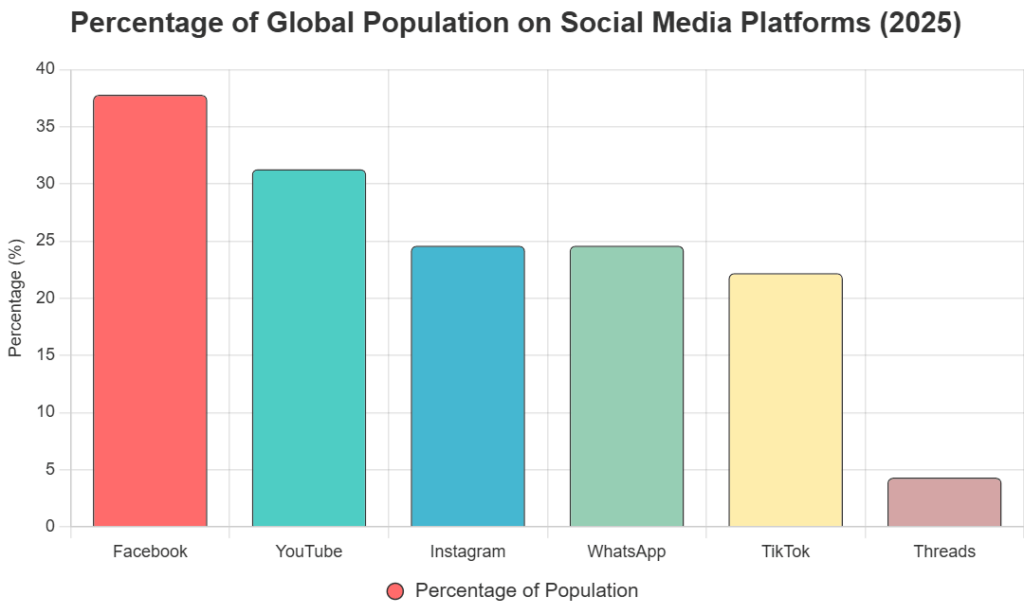
Because it levels the playing field. Startups often have limited budgets, but social media gives them access to a global stage — with over 5.31 billion active users (DataReportal, 2024), that’s 64% of the world’s population.
More importantly, 71% of consumers who have had a good experience with a brand on social media are likely to recommend it to others (Lyfe Marketing). That’s powerful word-of-mouth at digital speed.
Platforms like Facebook, Instagram, LinkedIn, and TikTok allow you to target your ideal customer with laser-sharp precision based on age, interests, location, and even behavior. This means you don’t need a massive ad budget — just smart strategy.
So, if you’re a startup looking to get noticed, connect with your audience, and grow fast — social media isn’t optional. It’s essential.
What Tools and Strategies Can Power Social Media Marketing Success in Startups
Start with Canva for making visually appealing content, Buffer or Hootsuite for planning posts, and Meta Business Suite for Facebook and Instagram ad management. Utilize social media data and Google Analytics to monitor performance and improve your strategy. To stand out in a crowded market, combine these with astute strategies like influencer partnerships, user interaction, and narrative. The finest aspect? The majority of these tools are inexpensive or free, making them ideal for entrepreneurs on a tight budget who want to have a significant effect.
If you’re wondering what kind of content to share on social media to increase visibility or attract leads, here are some effective ideas to help you stand out and grow your audience.
- Tutorial Videos
- Promo Videos
- Interviews
- Guides
- Templates
- Blogs
- Checklists
- Surveys
- infographis
- Case Studies
Since most social media platforms are used for entertainment, it’s essential to share your content in a fun and engaging way. It shouldn’t be purely informational — aim for a healthy mix of both information and entertainment, also known as infotainment. A good rule of thumb is the 60-40 content ratio: keep about 60% of your posts entertaining and 40% informative. This balance keeps your audience interested and prevents your content from feeling too heavy or boring.
Below, we’ve broken down what each platform and tool does best, so you can choose the right ones to boost your social media marketing efforts and make your startup stand out.
Facebook continues to be the biggest social media network in the world, with over 2.9 billion monthly active users. Because of its enormous content reach, it’s perfect for entrepreneurs looking to increase their visibility. Facebook Ads provide effective targeting options according to demographics, interests, geography, and activity. Additionally, you can simply track performance and optimize ads with the use of tools like Ads Manager and Meta Business Suite.
Instagram has over 2 billion active users, making it a go-to platform for visual storytelling. It’s perfect for sharing high-quality images, short videos, reels, and behind-the-scenes content. Content that’s creative, aesthetic, and emotionally engaging performs best here. With features like Instagram Reels, Stories, and Shopping, and tools like Insights and Meta Ads Manager, businesses can reach highly targeted audiences and build a strong brand presence.
With more than 1 billion professionals globally, LinkedIn is the most popular site for networking and B2B marketing. It’s perfect for sharing corporate updates, thought leadership articles, industry insights, and career accomplishments. The most effective content is typically that which is career-focused, value-driven, and instructional. Startups may contact decision-makers, produce high-quality leads, and establish reputation in their industry by utilizing tools such as LinkedIn Ads, Campaign Manager, and Analytics.
Twitter(X)
Twitter (now X) is a dynamic medium for trendsetting and real-time engagement, with over 600 million monthly active users globally in 2025. Concise, current, and conversation-driven content works best for sharing brief updates, industry news, and clever brand insights. tools like Twitter Ads, TweetDeck and Analytics can be used to connect with influencers, create buzz and build a strong community which can increase visibility and drive leads.
Pinterest has over 465 million monthly active users and works like a visual search engine, making it ideal for lifestyle, fashion, food, home décor, and DIY brands. Content with eye-catching images, step-by-step guides, and infographics performs well. It’s great for driving website traffic and brand discovery, especially with Pinterest Ads and keyword-targeting features.
Youtube
YouTube, with more than 2.7 billion monthly users, is the second-largest search engine globally. It’s perfect for long-form content like tutorials, product reviews, and educational videos. Consistent, high-quality video content builds trust and drives deep engagement. YouTube Studio and YouTube Ads offer powerful tools to grow and measure your audience effectively.
With more than 2.5 billion users, WhatsApp is an effective instrument for individualized and direct communication. With WhatsApp Business, it’s excellent for sending promotional messages, sharing updates, and providing customer service. Startups may enhance engagement and preserve solid client connections with tools like automatic messages, labeling, and fast replies.
Social Media Marketing tools for startups
These tools assist in content creation, scheduling, analytics, and campaign management, enhancing efficiency for startups:
- Hootsuite
- Purpose: Scheduling posts, managing multiple platforms, and tracking performance.
- Why: Streamlines workflows for startups with limited resources.
- Buffer
- Purpose: Social media scheduling and basic analytics.
- Why: User-friendly for beginners, ideal for consistent posting.
- Canva
- Purpose: Graphic design for posts, stories, and ads.
- Why: Offers free templates to create professional visuals on a budget.
- Sprout Social
- Purpose: Advanced analytics, engagement tracking, and team collaboration.
- Why: Provides deep insights for data-driven marketing strategies.
- Later
- Purpose: Visual planning and scheduling, especially for Instagram and Pinterest.
- Why: Helps startups plan aesthetically pleasing feeds.
- AdEspresso by Hootsuite
- Purpose: Ad creation and optimization for Facebook and Instagram.
- Why: Simplifies PPC-style ad management with A/B testing.
- Google Analytics
- Purpose: Tracks website traffic from social media campaigns.
- Why: Integrates with social efforts to measure ROI.
- BuzzSumo
- Purpose: Content research and influencer identification.
- Why: Helps startups find trending topics and credible partners.
- Mailchimp (Social Ads)
- Purpose: Combines email and social ad campaigns.
- Why: Offers a cost-effective way to sync marketing channels.
- Agorapulse
- Purpose: Social inbox, reporting, and team management.
- Why: Enhances customer interaction and team coordination.
How to do Social Media Marketing for Startups
1. Define Goals
Start by setting clear, measurable goals—whether it’s brand awareness, lead generation, or customer engagement. Goals give direction to your entire strategy.
2. Choose Audience & Platforms
Recognize your target audience and the websites they frequent. Depending on where they are most active, pick platforms (such as YouTube, LinkedIn, or Instagram).
3. Target Them
To reach the appropriate individuals, use platform-specific targeting techniques. For better results, customize your adverts and content according to demographics, interests, and behavior.
4. Prepare Content
Produce valuable, aesthetically pleasing, and high-quality material that appeals to your audience. For increased engagement, mix forms such as reels, carousels, movies, and photos.
5. Be Consistent
To stay in the spotlight, post frequently. Maintaining a regular publishing schedule enhances your brand’s visibility across all channels and fosters trust.
6. Be Engaging
By posing queries, conducting surveys, responding to comments, and utilizing interactive elements like tales or live sessions, you can promote involvement.
7. Share Helpful Content
Use your postings to inspire, educate, or address issues. Value-added content increases audience loyalty and establishes your expertise in your field.
8. Plan Your Posting
To plan what, when, and where you will post, use a content calendar. Making a plan in advance helps to keep things consistent and guarantees diversity.
9. Use Tools for Posting
Use scheduling software such as Buffer, Hootsuite, or Meta Business Suite to effectively automate and manage your postings on several networks.
10. Consider Comments & Reviews
Keep an eye on and reply to reviews and comments, both favorable and unfavorable. Interacting with your audience demonstrates your concern and fosters trust.
11. Use Analytics & Improve
Utilize the integrated analytics tools to monitor the effectiveness of your content. Discover what works and what doesn’t, then keep improving your approach to get greater results.
If managing all these aspects feels overwhelming or time-consuming, consider partnering with a digital marketer or marketing agency. They can handle your social media strategy while you focus on growing your business and improving your product or service.
Have questions or thoughts to share? Drop a comment below — we’d love to hear from you!